Wednesday, May 30, 2012

Everything You Need to Know About Baby Food


Commercial baby food is expensive.

So what are you actually paying for? If you asked any of the major baby food companies it would be something like "Only the best ingredients for the best nutrition."
Maybe it's just me, but it definitely does not taste like the best ingredients. According to the researchers and scientists at the Center for Science in the Public Interest (CSPI), commercial baby foods are diluted with water and thickening agents. While water and thickening agents are not bad for your baby, neither are rich in vital nutrients that are essential to growth and development.

How can you save money and feed your baby more nutrient-rich food? Make it yourself!
It's fun, it's easy, and it's cheap!

What You'll Need
a blender or food processor
pot or pan
fruits and vegetables
Ice cube trays (optional)
plastic bags or containers for storage

Which Foods and When
Click here for a complete chart of when to introduce certain foods into your baby's diet.
Read  Best Foods for Babies and How Do I know if My Child Has a Food Allergy for more information on foods for babies and toddlers.

How to Do It
Depending on the fruit or vegetable, you'll want to cook it before pureeing and feeding it to your baby. Here are some great resources for recipes and how to cook all fruits and vegetables.

Nurture Baby
Wholesome Baby Food

You can store leftovers in the refrigerator or in the freezer.
Another way to store leftovers is by freezing them in ice cube trays and then storing the cubes in a freezer bag. Brilliant!
Benefits of freezing:
You can thaw just the right amount for your baby's needs
Lasts for a few months in the freezer
Little or no packaging required

Here are some foods that do not require any preparation, just mash and feed!
Avocados
Bananas
Applesauce
Blueberries


Cookbooks

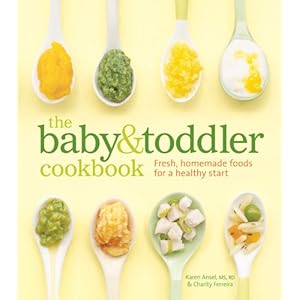
The Baby and Toddler Cookbook: Fresh, Homemade Foods for a Healthy Start

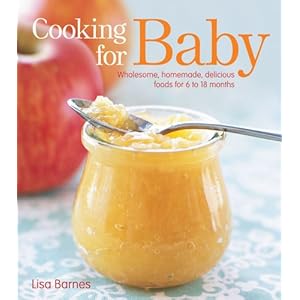
Cooking for Baby: Wholesome, Homemade, Delicious Foods for 6 to 18 Months

Source:
CSPI

Tuesday, May 29, 2012

Battle of the Siblings


Sibling rivalry is a completely normal occurrence.  All siblings go through it to some extent or another.  There is jealousy and competition that is felt and that can lead to bickering and fighting.  It can also depend on individual personalities of your children.  Some children are more laid back and others are easily flustered.  All of these things can lead to inevitable quarreling among siblings.


Try To Stay Out of It
When a fight between siblings unfolds, whenever possible, don’t get involved.  Unless there are issues of safety then try not to be a part of their disagreement.  If you are always stepping in to stop fights then they will not be able to learn to work out their own problems.  They need to learn to work things out themselves and resolve conflicts.  

Value Individuality
Make sure to give each child individual time and praise.  Let them know privately each of their own individual strengths and give encouragement.  Every child is different and has their own characteristics so each one needs a different approach.  But doing this will let them know you value their uniqueness and they will be less likely to feel shortchanged compared to another sibling.  

Get Them Involved
If it’s a matter of an older sibling feeling jealous of a newer sibling then give them tasks to do that they can help you with, such as, feeding the baby, bringing diapers, holding and cuddling the baby, etc. Or plan family activities that will get the younger child and older child working together and learning to share.  As you do these things they will feel valued and learn to care more about their sibling and want to help each other.


Be a Role Model
The way that parents resolve problems and disagreements sets a strong example for kids.  If you as a couple are yelling, slamming doors, or calling each other names then that is the way your children will think is appropriate to resolve their own conflicts.  But if you resolve problems respectfully, productively, and non-aggressively then your children will learn to do those things themselves when they run into problems.

Source:
Brazelton, T. Berry. (2006). Touchpoints. Cambridge, Massachusetts: Da Capo Press.

Friday, May 25, 2012

HealthyChidlren.org


I am addicted to this website!  I think I use it every week!  It has TONS of information about healthy living, safety & prevention, family life, and Ages & Stages of children!

My favorite thing is the search box.  
 
What make this search box so unique from other websites is the fact that is actually works! (giggle)  For example, a couple weeks ago I wanted more information about burping and the search box brought up this GREAT article along with many other articles!

Wednesday, May 23, 2012

Award Winning Children's Books

As a child, I remember walking through the library and looking for books based on two things: the picture(s) on the cover and the medal announcing that it was a "cool" book. I never actually knew what the medal was for, but anything in life that has a medal has to be special.
Now that I'm older, I decided it was time that I researched the history and meaning of these awards. I was surprised at what I found:


The Caldecott Medal

This medal recognizes distinguished children's picture books, and the award is given to the illustrator of the book. The medal is named after Randolph Caldecott, a nineteenth-century award winning illustrator. Books bearing the Caldecott medal have wonderful illustrations as well as story lines. Below is a website with a list of all the Caldecott medal books since 1938.


The Newbery Medal

The award is given to the author of the most distinguished contribution to American literature for children. The award has been given since 1922, and it was the first children's literary award in the world! 
Here are some criteria for receiving the Newbery Medal:
  • The book must be considered for its theme, presentation (clarity, accuracy and organization), plot, characters, setting, and style.
  • The book must relate to a child audience.
  • The book must contribute to literature.
  • The book must stand alone and not as a part of a multimedia presentation.


Check out these recent award winning books!


Monday, May 21, 2012

Parent-Child Yoga

A mom's (or dad's) life is pretty busy, and often you can find yourself wondering when you will have the chance to relax. I’m here to tell you that time can be today (and every day if you choose)! How?


Parent-Child Yoga!

http://bit.ly/JKlSsl
Photo
Not only is it relaxing for you, but it is also a bonding experience with your child, that offers them many developmental benefits such as:
  • Fine Motor Skills
  • Mental acuity and focus
  • Hand-eye coordination
  • Mind/body developmental awareness
  • Coping skills 
  • Increased awareness and "sense of self"
A child's brain is doing a ton of growing in between birth and eight years old. Breathing and stretching has been found to be very helpful for developing the brain and keeping the child's emotions under control. Yoga combines both breathing and stretching--awesome! 

I have a friend who does this with her 3 little girls EVERY DAY, and they love it! They actually started doing it together because her oldest (who was only 4 at the time) asked to join her, and slowly, as the younger ones got old enough, they joined in too (her youngest started trying at 2, but it was only sporadic and more like tumbling than yoga). 

Her advice is if they don’t seem interested or they get tired of it quickly to just let them do their own thing for a while. The trick is to have something quiet already prepared for them to do in the same room as you; such as reading, coloring, playing with balls or blocks. Just remember that kids have short attention spans, and need to move to learn, so don’t expect your sessions to be very long nor to stay on one pose for very long. There are many places in the Utah County area that offer children’s Yoga classes; this may be a good thing to check out to get some ideas for at home (one time passes are usually between $6 and $12 dollars), and so you know what to expect.

Please, leave comments with your experiences and/or tips in doing mom and child yoga!

Friday, May 18, 2012

Free Summer Activities!


Wanting to get out and do some fun things this summer?! Well here are some FREE (or nearly free) things you can do with your kids:

1. The first stop is your local library! Not only can you borrow books and movies for free but many offer puppet shows, book clubs, and story times. The Provo City Library has many different activities for kids of all ages. Bookstores like Barnes & Noble and the BYU Bookstore also offer weekly story times.

At the Provo City Library:
Every Friday from 10-10:30am is Book Babies (ages 0-12 months); they read stories, list to songs, and do finger plays.

Tuesday, Wednesdays and Thursdays from 10:05-10:25 AND  11:05-11:25 there is Toddler Time (ages 1-2years).

Tuesdays, Wednesdays, and Thursdays from 10:00-10:30 and 11:00-11:30 in room 117 there is Preschool Time (ages 3-5years).

There are many other activities and events that this library hosts so visit their website at www.provolibrary.com  and see what they have for you!

Barnes & Noble:
          Orem - Saturdays @ 1:00pm and Wednesdays @10:00am.
          Sandy -  Wednesdays @ 11:00am.
          Murray - Wednesdays @11:00am.

BYU Bookstore offers story time (downstairs in the children’s department) on Wednesdays @11:00am.
http://bit.ly/JTnP3R


2. The second stop on our tour is for creative and crafty kids. 
 Home Depot offers Kids’ Workshops  on the first Saturday of every month from 9:00-11:00am.

Lowes offers Build and Grow Kids’ Clinics see www.lowesbuildandgrow.com for their schedule (times are different each week).

3. The third stop on our tour of free activities and events is at your local art museums. Not only can kids look at art but many offer activities for kids to do to practice their own art skills.
Springville Museum of Art is hosting a Children’s Art Festival on June 8th from 10:00am-2:00pm. There will be many different types of art activities for children to explore (printmaking, sand painting, etc.). Check out their schedule of events at www.smofa.org

4. If your kid loves science check out the Eyring Science Center Planetarium on BYU campus ($2) planetarium.byu.edu as well as their Life Science Museum (free) mlbean.byu.edu

5. Want to do something outside? 

Visit North Park and stop by the Daughters of Utah Pioneers Museum OR the Sons of Utah Pioneers Village while you’re at it. 

Another popular outdoor activity is Geocaching. This is a free treasure hunting game. There are lots of caches hidden throughout the Salt Lake area. Just remember that if you choose to remove a “treasure” to replace it with another item for the next treasure hunter to find. Visit www.geocaching.com for more information.

Provo City Center www.provo.org:
On Saturday, June 2nd you can head out to Utah Lake State Park for the Utah Lake Festival. There will be free food, games, and activities between 10am and 2pm!

On Tuesday, July 24 head out to North Park (500 N. 500 W) for a Pioneer Day Extravaganza! There will be games, food, crafts, music, antique car show, a homemade pie contest, and much more! If you dress in your best pioneer outfit you may win a prize.

http://bit.ly/KgZxjv
Throughout August there are Monday movie nights at Rock Canyon Park (2620 N. 1200 E.). They play Just Dance on the Wii before the movie. For a couple bucks you can purchase candy, popcorn, and drinks (or you could bring your own). Bring blankets and/or chairs and bug spray!

Wednesday, May 16, 2012

Cognitive Activities You Can Do at Home!

When I was a kid, one of my favorite activities was taking empty toilet paper tubes and creating all kinds of random inventions. My siblings and I also loved boxes, of all sizes and shapes. We used the boxes to create forts and buildings, it was so much fun! It turns out these activities are not only fun, but they are one of the best cognitive development activities we could be doing! In case you aren't familiar with the word "cognitive" it refers to mental processing and thinking skills.
Cognitive development starts as soon as a baby is born, but around 12 months they start to recognize that the world around them is made up of shapes, sizes, and space. Combining objects to see what fits where is an early interest in space. They can also get stuck in between furniture and other small spaces while experiment with size and shape. Learning about size, shape, and space is important because it creates a necessary foundation for later understanding of mathematical concepts.

Here are some fun activities for your infant or toddler that creates the perfect environment for learning about sizes, shapes, and space. 

Photo

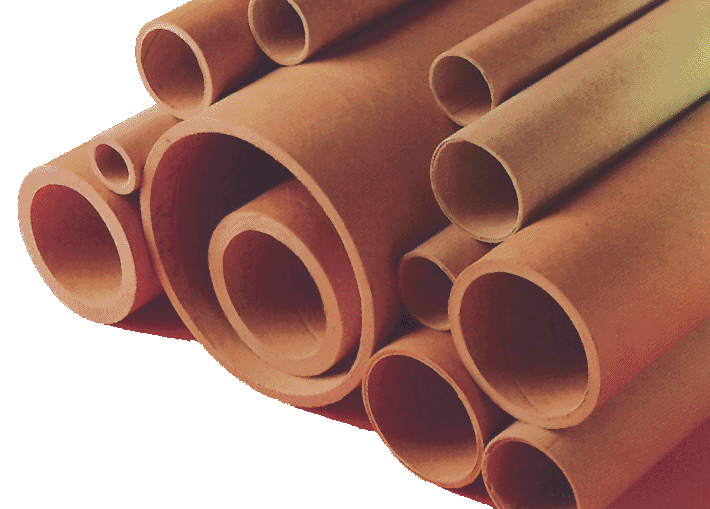
Tubes Inside of Tubes (12 months +)
 
Materials:
tubes of various diameters (toilet paper tubes, paper towel tubes, wrapping paper cores, paper roll cores, PVC pipes, drinkings straws)

To Do:
Say nothing and watch what your child does with the various tubes; let your child do their own learning and discovering.
If you see child start to experiment by placing tubes within each other, ask questions like "Will this small tube fit inside the larger tube?" and express interest in their discoveries.

More Ideas:
Add objects such as cars, string, scarf, etc. Once again, let your child do the experimenting and sit back to watch them develop their cognitive abilities. 

Photo

Graduated Nesting (14 months +)

Materials:
plastic bowls of graduated sizes that nest together

To Do:
Simply present these nested bowls to the child and see what he does.
Do no show him how to nest them or try to correct mistakes.
This idea is best learned by discovery.

More Ideas:
Instead of presenting them to the child in a nested state, present them separately. See if the child discovers that they nest together.
Use boxes that can nest and also be stacked.

Photo

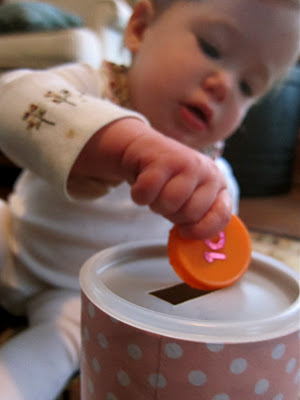
Slot Box (14 months +)

Materials:
shoebox with lid OR empty carton/canister (yogurt, sour cream, cottage cheese, etc).
metal baby food jar lids OR milk jug lids
sharp knife

To Make:
Cut a slot in the lid of the shoebox just the right width and length to fit the lids through.

To Do:
Probably no introduction is needed. If the child does not know what to do with this activity, show him how to make the lids go through the slot to drop into the box.
The child will enjoy sticking all the lids through and then dumping them back out again.

More Ideas:
Make "mailboxes" and let the children put junk mail and cards through the slot.


Source
 Miller, Karen. (1999). Simple steps. Beltsville, Maryland: Gryphon House, Inc.

Monday, May 14, 2012

Don't Fry Day


The National Council on Skin Cancer Prevention Declares the Friday before Memorial Day, May 25, 2012 is “Don’t Fry Day” To Encourage Sun Safety Awareness
 
With continually increasing rates of skin cancer it is very important to remember to protect your child’s skin this summer. 
Remember these ways to not let your kids “fry” this summer.
  • Wear sunscreen. Wear sunscreen. Wear sunscreen.  Can I say that again? WEAR SUNSCREEN. This is an easy way to protect your child’s skin.  Make sure to apply frequently. 
  • Put on a hat and cover up with clothes.  Hats and clothes are often even more effective then sunscreen because it doesn’t rub off, it’s not messy, and you have less “missed spots”.  
  • Provide areas of shade.  Find a tree, bring an umbrella, and take advantage of lower UV rays before 10 a.m. and after 4 p.m. 
  • Be an example and protect yourself.  If you don’t wear sunscreen, your kids won’t see the point in wearing sunscreen either, so take these tips and apply them to yourself to show your kids the best way to protect their skin.

Wednesday, May 9, 2012

Creeping & Crawling


Most parents look forward to the day that their infant will start scootin' along on their tummy, trying to grab and touch everything in sight. It is an exciting time for the parents and their child because it's a visible sign that their baby is developing. Some babies never master the act of crawling, and this can cause some anxiety for their parents. I am here to put those worries to rest. 

Not all babies learn how to crawl.

Surprised? When I first learned that crawling is not a milestone I was surprised too!
A lot of babies go straight from laying to standing to walking, completely skipping the crawling step. Remember, this is completely normal. For these babies, the thrill of standing and walking overshadows the logical sequence of crawling

Photo
Most babies start to creep and crawl around 7-8 months; others may start early while may start late. Babies will also create their own style of crawling, and some will scuttle backwards like a crab until they learn to control the muscles that will propel them forward. No matter how, or when, your baby starts to crawl, the most important thing to do as a parent is to not worry; your baby will learn when they are ready. But, if you feel like your baby needs a boost, here is what you can do:
  • Place your hand against the bottom of your baby’s feet. Hold steady and they will start to push against your hand. Eventually they will realize they can use their knees and/or their feet to push forward on their own.
  • A lot of parents do not give their baby enough “tummy time.” What is tummy time? Just laying your baby on their tummy to play and explore. This strengthens their neck, back, and shoulder muscles, which are essential in crawling.
  • Place items on the floor just out of their reach, this gives them incentive and determination to find a way to get to the toy. Make sure you don’t let them get too discouraged; listen to their cues to know when you need to ease their frustration by helping them get to the toy.
Safety Considerations
·         When you notice your baby starting to creep around, get out the baby safety products and place toxic chemicals in a high place. Make sure all open outlets are covered, sharp and small objects are placed out of their reach, and cupboards you don’t want opened are locked. This will make it much easier to let your baby crawl around and explore the world without being worried that they will get hurt.

Crawling is a fun stage to look forward to, but remember not to compare your baby to other babies. Each infant is unique and will start when they are ready, and don’t worry if your baby doesn’t start at all! They may just jump right into walking, and that is just fine.