

Showing posts with label Communication. Show all posts
Showing posts with label Communication. Show all posts
Wednesday, April 18, 2018
How to Teach Children Honesty


Wednesday, February 7, 2018
Teaching Children Emotional Intelligence

Wednesday, May 24, 2017
Guest Post: 10 Tips for Having Difficult Conversations, Part 2

Use their words
Of all the things you do, this is probably the one that will make the biggest difference. Using our child’s words shows them that we are listening and that makes them feel validated. A great way to do this is to say, “What I understood you to say was ____” and then use as many of their words as you can remember. Take this one step further by then asking if what you understood was what they meant. When we use their words to clarify, we are sending a powerful message that we not only care what they are talking about, but we want to understand their view and concerns, and that speaks volume to them.
Wednesday, May 17, 2017
Guest Post: 10 Tips for Having Difficult Conversations, Part 1

My mom was always waiting up for me, book in hand, when I came home at night. Often we’d spend the next hour or two talking about life and the problems I was facing. During those late night talks we discussed everything, nothing was off limits. Topics ranged from heartbreak over a boy, my latest crush, how to have a healthy self-image, what to do when I felt uncomfortable in a situation, sex and drugs, and how to deal with peer pressure.
Wednesday, April 5, 2017
Effective Communication to Help Your Child's Development and Well-being
 |
Wednesday, December 28, 2016
Time In: An Alternate to Time Out

Wednesday, September 14, 2016
Why Do Children Talk to Themselves?

Friday, June 24, 2016
Help Prevent Whining Using the Interruption Rule
 I’d love to share another tip to help prevent whining before
it begins!
I’d love to share another tip to help prevent whining before
it begins!A little while ago, I wrote a post about preventing whining before it begins. Essentially, it’s briefly stopping what you’re doing, letting your child share while you're on his level and responding appropriately. This is a fabulous tool to use to help reducing whining. Unfortunately, I found myself needing a reminder of this tip recently. We had family over for dinner and I failed to use this tip. Instead, I repeatedly ignored the same requests over and over while I was talking to adults. The truth is, in parenting, we have a lot of opportunities to try again and be just a little bit better as a parent.
Wednesday, April 13, 2016
How to Speak Parentese

Wednesday, November 18, 2015
Play Strengthens Your Child’s Development
 |
| Photo Credit |
Wednesday, September 30, 2015
Coaching Your Child's Emotions
 The ultimate test of parenthood is that moment when
your child is screaming at the top of their lungs in the middle of the grocery
store because of one word, “No.” Each parent will react differently to this
situation based on what works with
their child. When handling your child’s emotions, it is important to keep in
mind how your reaction will affect their emotional intelligence. Even though
something works does not mean it is
the best style for your child’s development.
The ultimate test of parenthood is that moment when
your child is screaming at the top of their lungs in the middle of the grocery
store because of one word, “No.” Each parent will react differently to this
situation based on what works with
their child. When handling your child’s emotions, it is important to keep in
mind how your reaction will affect their emotional intelligence. Even though
something works does not mean it is
the best style for your child’s development.In his book, Raising and Emotionally Intelligent Child, John Gottman brings up how having an emotional bond with your child teaches them values and morals. Practicing emotional communication with children teaches them the importance of being able to recognize emotions and distinctive feelings, A.K.A. Emotional Intelligence (EI). As a parent, it is important to teach your child how to understand their emotions through the example you provide for them. The following styles may determine how a parent my respond to their child’s emotions:
- Dismissive: This parenting style may also be known as uninvolved. If a child is showing negative emotions or behavior, the parent will ignore or neglect those feelings.
- Example Phrases: “That’s silly” or “You’re not really upset”
- Disapproving: Children who are expressing negative feelings will be criticized or punished by the parent for showing those emotions.
- Example Phrases: “I’m tired of your behavior,” or “If you keep acting like this you’ll be grounded.”
- Laissez Faire: The parent will accept and empathize with their child’s emotions, but do not set limits on child’s behavior.
- Example Phrases: “It’s okay if you’re feeling that way,” or "We'll try again tomorrow”
- Emotion-Coaching: Parent is able to empathize with child’s emotions, as well as offering guidance to manage emotions and setting limits on their behavior.
John Gottman emphasizes how emotion-coaching is a
great balance between parenting styles, because it focuses mostly on teaching
children how to manage their emotions.
The emotion-coaching parent follows these steps when
working with their child:
“1. Become aware of the
child’s emotions;
2. Recognize the
emotion as an opportunity for intimacy and teaching;
3. Listen
empathetically, validating the child’s feelings;
4. Help the child find
words to label the emotion he is having; and
5. Set limits while
exploring strategies to solve the problem at hand.”
(pg. 24, Raising an Emotionally Intelligent Child, Gottman)
 As you read through this you are probably thinking, “I
don’t have enough time to do this every time my child is upset.” We all know children
tend to get upset at the most inconvenient times. Whether it is right before
you leave for work, drop them off as school, or during your much needed grocery
run. Overall, the more time you spend working with your child’s emotional
intelligence will improve their ability to manage their feelings. A goal as a
parent is to raise their child to be autonomous. Through emotion-coaching,
children can learn how to appropriately manage their emotions on their own.
As you read through this you are probably thinking, “I
don’t have enough time to do this every time my child is upset.” We all know children
tend to get upset at the most inconvenient times. Whether it is right before
you leave for work, drop them off as school, or during your much needed grocery
run. Overall, the more time you spend working with your child’s emotional
intelligence will improve their ability to manage their feelings. A goal as a
parent is to raise their child to be autonomous. Through emotion-coaching,
children can learn how to appropriately manage their emotions on their own.
Information came from
Pages 23-24 in John Gottman’s book,
Friday, August 7, 2015
Talking is Teaching
 My baby recently reached the age where she is starting
to coo and make sounds. The first time she made a throaty little gurgle, I got
so excited! Now, when I get down on her level and talk to her about her day,
she loves to “talk” back to me, no doubt thinking that we are having an actual
conversation. When we bring her around family it is not uncommon for them to mimic
her sounds back to her. Little do they know that through this back and forth
communication, they are helping her develop language skills that will significantly
help her in the future.
My baby recently reached the age where she is starting
to coo and make sounds. The first time she made a throaty little gurgle, I got
so excited! Now, when I get down on her level and talk to her about her day,
she loves to “talk” back to me, no doubt thinking that we are having an actual
conversation. When we bring her around family it is not uncommon for them to mimic
her sounds back to her. Little do they know that through this back and forth
communication, they are helping her develop language skills that will significantly
help her in the future. 
Here we learn
that we can teach babies these skills through play. Simple games like
peek-a-boo and singing songs about everyday things the child can see will help
develop their executive function.
Simply talking at your child is not enough. The “conversational duet” is what researchers call the back and forth caregivers use when interacting with children. It is important to talk with your child without interruption. Studies show that language learning doesn’t happen when conversations are interrupted.
The article linked above teaches that
“when parents keep the conversation going, rather than simply trying to get
their children to hear as many words as possible, they are preparing their
children for later language and school success.” It is more important to have
quality interactions than a large quantity of words.
As parents, we do
everything we can to help our children grow and develop. By having meaningful conversations
with our children, no matter their age, and teaching them through every day
interactions we are setting them up for success.
What are some of your
favorite things to talk with your children about?

- Amanda
Wednesday, March 18, 2015
Learning to Speak
Sometimes as mothers and fathers we actually do the right
thing for our child without even knowing it. When the doctor handed me my
baby for the first time I began to talk to her softly. I think I told her
I loved her and was glad she was with us. When I changed her diaper for
the first time she was awake, a little fussy, and looked so small and
vulnerable that I could not help but talk to her. I don’t remember what I
said specifically but I spoke softly in a sing-song voice that I did not know I
had. She calmed down when she heard me speak so I continued; in fact, I
talked to her a lot. Not just when I changed her diaper but when I held
her, carried her, played with her, traveled with her, pretty much all the time
except when she was asleep. I was already succeeding as a great parent and
I didn't even know it!
.JPG)
I found out later that it is important to a child’s language
development to begin talking to them when they are brand new babies. How
do babies learn to speak? What can a parent do to help? I learned
that by the time my little girl turned two
and a half, she would have 600 words in her vocabulary and by age five or six
she would know thousands of words. Wow!
 |
| Photo Credit |
Babies, toddlers and children progress at different rates.
Just as some babies are early crawlers; and some are late walkers, children
gain language at different rates as well. All babies; regardless of their
culture or native language, share the same steps to
language learning. They begin with eye contact and will look at an object they
want while reaching and vocalizing. The pre-linguistic part of language
development begins with blowing bubbles, vocalizations, and crying. They do what works.
Steps to Language
They begin talking with single words, usually a
noun. These first words can mean a whole sentence. For example “up”
could mean, “Mom I want you to pick me up.” These words are called holophrases,
whole phrases which are full of meaning, because they are self-contained. Then children will begin using words in a telegraphic
fashion. Basically they only use the words that will convey what they
want like “baby go”. After the telegraphic stage they learn words at an
amazing rate. Two-year-olds, for example, often learn two to three new
words each day. Three year olds have some trouble with pronouns but by the time
they are four and five they will have mastered them. Four year olds will speak
in complete and compound sentences, they will even make up words to fit their
needs (Crosser,
2008)
Helping language development
The first way parents can help their child in language development is speaking
in the way I did with my new born infant. I did not know it at the time
but this style of speech is called parentese and
it provides a scaffold for the learning of language. Parentese is
not baby talk, it involves using a slightly higher than normal pitch and
exaggerated vowel sounds. You need to use short and simple sentences,
along with repetition.
One of the best ways to help your baby in their language development is to
provide an environment free of abuse and excess stress. This will free
your baby’s brain to create the necessary language connections. Encourage any
attempts they make in their language development. Above all, relax and
enjoy your child, you are probably already doing most of the things that will
help your child with their language development.
Contact Help Me Grow for more information! 801-691-5322
Contact Help Me Grow for more information! 801-691-5322
Monday, March 2, 2015
Oh the Places You'll Go!
Since this week is Dr. Seuss’ birthday, I thought it would be
appropriate to start off with one of his quotes:
 |
| Photo Source |
“The more that you read, the more things you will know. The more that
you learn, the more places you'll go.” – Dr. Seuss
I love to read! Growing up, I remember my mom taking my sisters and I
to the library every week. When I was really little, I’d bring home huge stacks
of picture books with simple stories. As I got older, I’d make space in my
backpack for 10 novels of many different genres (that was as many as the
library would let you check out at a time).
When we got home, I’d snuggle into my favorite corner to read for
hours. I’d visit places all over the world, learn about the people of various
periods in history, and solve challenging mysteries. I learned new vocabulary,
observed challenging interactions between characters, and stretched my
imagination as I experienced each new world.
As a result, school became easier for me, my relationships with family
and friends were enhanced, and my communication skills and vocabulary were
always more advanced than they were expected to be. Now, my taste in books has
changed somewhat, and I don’t find as much time to read as I’d like, but the
difference that a love of reading has had on my life is incredible.
To gain a love of reading later in life, and thus be able to benefit
from reading, it is crucial that parents read to their young children. Why
should you read with your kids? Jim Trelease, author of The New York Times
bestseller, “The Read-Aloud Handbook”, says that “words are the primary
building blocks for learning and there are only two efficient ways to get words
into the brain: either through the eye or through the ear....the last 30 years of reading
research confirms this simple formula: students who read the most, read the
best, achieve the most, and stay in school the longest”.

This March, KUED celebrates 22
years of encouraging reading in Utah, in partnership with schools, libraries,
and museums across the state.
KUED recently kicked off its 22nd Reading Marathon which runs from
March 1st through the 31st. Children
from Pre-K to 6th Grade are encouraged to participate, and read at least 20
minutes a day. Reading logs can also be downloaded or printed from kued.org/reading.
“We encourage parents to spend time reading with their kids, and log
their reading minutes for an invitation to the 22nd Annual Super Reader party
in April,” says KUED Education Coordinator Elise Peterson. “Our theme this year is STEAM: Science,
Technology, Engineering, Art, and Math. To see pictures from previous years,
visit our Facebook page at facebook.com/kuedkids.”
“For over 50 years KUED and PBS have been a friendly and trusted face
in your home and we hope to build on that relationship with new resources,
information, and events for your family that engage, educate, and entertain,”
says Peterson.
Find out more at kued.org/reading and visit the KUED Kids Facebookpage, for information about events, programs, and ideas for families.
So, what are you waiting for!?
"You're never too old, too wacky, too wild, to pick up a book and
read to a child." – Dr. Seuss
Wednesday, February 25, 2015
Is My Child Too Young for Screen Time?
We all know that media is all around us, and technology is just getting more and more advanced. Many moms wonder if they should let their children watch TV, play video games, use an I-pad etc. They ask themselves "What are the risks? Are there any benefits?"
AAP recommends no screen time for infants under age two.
For children older than two, the American Academy of Pediatrics (AAP) says that there are great benefits to media when it is teaching good lessons and when parents can watch it with their children. For example Sesame Street, and Super Why teach children about letters, numbers, how to get along with others, and why it's important to have self-control.
The Mayo Clinic explains that there are also some potential risks if parents aren't aware of what or how much their children are viewing media. Watching too much media is linked to:
AAP also gives some great tips for using media in your home:
Establish a few "screen-free" zones in the house:
For more information and ideas check out our Pinterest page.
What do you do to help your kids use media in a smart way?
AAP recommends no screen time for infants under age two.
- Infants at this age learn best by interacting with people and exploring different objects that are new to them.
- Give them toys that they can play with
- Talk to them and read to them
 |
| Photo Credit |
The Mayo Clinic explains that there are also some potential risks if parents aren't aware of what or how much their children are viewing media. Watching too much media is linked to:
- Aggression - if it is violent media
- Poor sleep or having trouble falling asleep
- Obesity possibly because of junk food advertisements
- Impaired academic performance
 |
| Photo Credit |
AAP also gives some great tips for using media in your home:
- Watch with your kids and talk with them about what they are seeing
- Explain questionable content to your children
- Calm concerns by explaining that TV is not real
- Teach your kids about advertising
- Answer any questions they might have
- Pick shows that are developmentally/age appropriate
- Use many other mediums to learn from: like reading books, going on outings as a family, playing with toys and board games etc.
Establish a few "screen-free" zones in the house:
- Turn off the TV during dinner
- Make sure there are no televisions or computers in children's bedrooms
For more information and ideas check out our Pinterest page.
What do you do to help your kids use media in a smart way?
Friday, January 16, 2015
The Happiest Baby

Babies cry for a variety of reasons. Sometimes they’re hungry, tired, need a
diaper change, and sometimes we don't know why they are crying. How can you soothe a crying baby when their
needs are met and it seems like they’re crying for no reason at all? Dr. Harvey Karp has some suggestions as to
how to do this. He says that babies are
born with a “calming” reflex that can be triggered using these 5 “S’s”. Sometimes babies will calm down with one,
while other times they will need more, possibly all five before the calming
reflex is turned on.
The 5 “S’s”
|
What they look
like
|
Swaddling
|
Wrapping them tight in blanket, arms confined
|
Side or Stomach
|
Turning them to side or stomach while holding them,
after they are swaddled.
|
Shushing
|
White noise, as loud as baby is crying-Shushing,
vacuum, hairdryer, static noise.
|
Swinging
|
High speed in swing, or letting baby’s head gently jiggle while supporting it with your hands
|
Suck
|
Nursing, pacifier, or finger
|
Dr. Karp suggests that the first three months should be considered
a fourth trimester. Babies need
swinging/rocking, swaddling, and shushing, to help them feel at home. Dads are just as effective at doing these
techniques, and sometimes do them better than moms, since they are often not as timid with newborns.
 |
| Photo Credit |
Swaddling:
- Swaddling should be the first thing you do, and should be done for the first few months of infant's life to make them feel like they are back in the womb.
- It needs to be tight, with their arms down, so that they don’t upset themselves with their arms.
- Click here for a video example of swaddling
Side/Stomach:
- After baby is swaddled, turn her to her side or stomach, and she will often almost immediately stop crying.
- When babies are on their back, they often feel like they are falling.
Shushing:
- Shushing is basically a white noise. It needs to be as loud as the baby is crying, so that they can hear it over their crying.
- “Shushing” can be done in a variety of ways. It can be the parents or caregiver shushing in their ear, vacuuming, a tape recording of caregiver shushing, the sound of a hair dryer, or turn the radio in between two stations and let the baby listen to static. It reminds them of the sounds they heard in the womb.
Swinging or wiggling:
- Putting a baby in a swing on high speed will help to calm baby down.
- Make sure that they are tightly swaddled and strapped in so they won’t fall out.
- Wiggling: Sit down with feet shoulder width apart, knees together, and hands on the knees while resting her head in your hands. Wiggle back and forth, and let her head gently jiggle a little like Jell-O. This should be a gentle motion, since doing it vigorously can lead to shaken baby syndrome.
 |
| Photo Credit |
Suck:
- The last “S” is suck - using a pacifier, a finger, or nursing.
- A trick to help keep baby's pacifier in her mouth is to gently hit it so baby thinks she is losing it. This helps to strengthen the mouth muscles to keep it in.
Dr. Harvey Karp is an amazing pediatrician, He developed The Happiest Baby on the Block DVD. To find out more, visit http://www.happiestbaby.com/
These tips can help calm a crying baby almost instantly. We'd love to hear from you! Please comment and share your experiences and how these tips have helped you soothe your little one!
These tips can help calm a crying baby almost instantly. We'd love to hear from you! Please comment and share your experiences and how these tips have helped you soothe your little one!
Tuesday, November 25, 2014
Tis the Season for "Thanks" Giving
With Thanksgiving coming up in a couple of days, some of you may be wondering, "How can I teach my kids about gratitude?" or "How do I ensure that I am raising thankful children?" Every parent wants his/her children to be thankful for the things they have in their life and not take things for granted. Many children know the simple pleases and thank yous, but how do you guarantee that your children truly are grateful? Here are some great tips on getting your children in the spirit of Thanksgiving by teaching them about gratitude.
What are some ideas you find helpful to teach your children about gratitude?
 |
| Photo Credit |
- Be a role model. As with many other behaviors children learn best by watching the examples set by parents. Showing children how to be grateful is much more powerful than simply telling children to be grateful. Let your children hear you expressing gratitude to others.
- Tell your children thank you. Ellie, from the Musing Momma blog, writes, "Much like 'give respect to be respected,' children learn to appreciate by being appreciated. Thank your child for clearing the table, for playing nicely with his little sister, for waiting patiently while you finish a phone call. Thank him for just being a downright awesome kid. Show him how it feels to be appreciated and have his effort recognized, what gratitude sounds like, and how easily it can be a part of daily life."
- Thank you notes. Writing thank you cards may seem old fashioned, but when children write thank you notes they will understand the importance of recognizing and acknowledging kind acts or gifts they have received. They will also be less likely to take the gift for granted.
- Let kids help out. Jenny from the blog, Mamatoga, says, "The more children contribute around the house, the more they realize how much effort it takes to keep a household running. Giving your child age-appropriate chores like setting the table or feeding a pet (or for teenagers, working a part-time job) will help them appreciate that these tasks require effort and don’t just happen automatically. They will also feel the satisfaction of earning what they have and making a valuable contribution to the family."
Photo Credit
- Incorporate gratitude into everyday life. When I was going through a particularly rough patch in my life a couple of years ago, my mom suggested we send each other an email every night with 10 things we were grateful for that had happened that day. Surprisingly, it made a huge difference and put me in a much happier mindset than I had been in before; I looked forward to those nightly emails. While Thanksgiving is the most popular day for giving thanks, don't let gratitude only be shown on this one day of the year. Have children keep a gratitude journal or every night at dinner go around the table and have each member of the family share something they are grateful for that day.
- Read Thanksgiving books. Many children learn certain concepts best (such as gratitude) by reading picture books. Read one of these fun Thanksgiving picture books with your children.
Photo Credit - Give back and volunteer. Volunteering is a great way to inspire children to be thankful. When children have the opportunity to experience another's gratitude, they will recognize and be grateful for the things that they have. This can be accomplished in several ways: donating clothes to a local thrift store, buying and donating a toy for children in need, or something as simple as baking cookies and taking them to the neighbors. There are so many fun ways to get your children involved in service.
- Practice saying no. This means not giving your child everything she wants. This can be very hard at times, especially when your child is looking at you with big puppy dog eyes begging for a new toy. Just remember if you do not give her everything she asks for, she will be more appreciative of the things she does receive.
- Thankful Turkey Box. If you are looking for a fun way to show what you are thankful for this Thanksgiving, click here to make this cute turkey box. Everyday have each member of your family write down something they are thankful for. On Thanksgiving, open the box as a family and read everything you're grateful for.
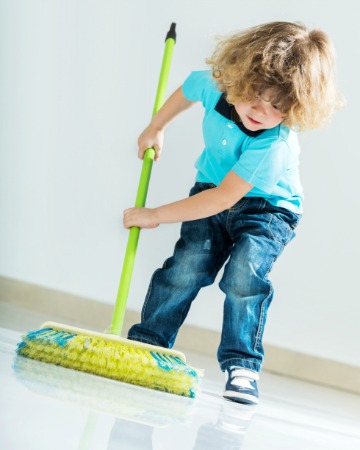


 |
| Photo Credit |
Tuesday, May 27, 2014
Not all Praise is Created Equal
 |
| Photo Credit |
I read an information sheet the other day about praise and I really liked it, so I decided to share! Praise is the practice of encouraging children by focusing on their efforts rather than their outcomes in order to build self-confidence and feelings of self-worth. Praise helps children understand that their efforts are appreciated, not just their accomplishments.
At different stages of development, your child will require different types of praise.
Infants: This takes the form of smiling, hugging, holding and clapping. As babies get older, they benefit from praise that encourages them to safely explore their environment.
Toddlers: Praise that encourages exploration is the most helpful for toddlers. Research tells us that 3-year-old children are more likely to tackle challenges and to persist at a task, when their mothers have praised and encouraged their independence by age two.
Preschoolers: Encourage your preschooler to try appropriate and challenging tasks, like putting on shoes, and socks. Always acknowledge their efforts as well as successes.
NOT ALL PRAISE IS CREATED EQUAL


All this information was taken from a resource sheet by Talaris Institute. For more information, please visit their website!
Thursday, May 22, 2014
Why I Love the ASQ!
One
of my favorite FREE Help Me Grow services is receiving the Ages & Stages
Questionnaire (ASQ), a tool you can use to track your child’s development! The
ASQ is available from birth until age five and a half. Here are some of my
reasons why I love the ASQ!
| Photo Credit |
1. Let’s talk
kindergarten readiness. Did you know that families
who complete an ASQ at least once per year are more likely to have a child who thrives
in kindergarten? Less than 50% of children with delays have had them addressed
before kindergarten. And keep in mind that some delays are visible or readily
apparent, while some are less so. The ASQ can help identify both. That alone
makes the ASQ worth taking…and worth taking more than once.
2. The ASQ is a friendly questionnaire that helps you identify & celebrate your child’s strengths. Your child is unique, and lucky for you, the ASQ will help identify your child’s strengths. Completing the ASQ should be fun. Remember to celebrate your child’s success no matter how big or small it may be.
3. On the flip-side, the ASQ may
ask a question that you just hadn’t thought of trying with your child. These
types of questions prompt you to try something new with your child! Ask your care coordinator
to send you supplemental developmental activities to continue to strengthen
your child’s development.
4. But honestly my favorite
part… the ASQ pinpoints areas you can discuss with your doctor. I don’t know about you, but
I HATE going to the doctor and being sent on my way a few minutes later without
having time to formulate questions I would like to ask.
5. Baby journaling. Alright for
those of you who are big journal writers, you can put a copy of the ASQ in your
baby’s journal to highlight developmental milestones. Admit
it, we’ve all looked back on the baby books our parents did for us and oohed
and aahed at the milestones our parents recorded for us… or worse, the empty
blanks our busy parents never recorded. Add the ASQ into the journal as a
supplement or go ahead and just add the ASQ in there and call it good.
6. The ASQ is an evidence-based
tool. For
the nerd in me, this is important to me for valid results. A ton of research
and testing went into the ASQ. The ASQ asks questions that are sensitive enough
to pick up on developmental issues that your child may need more support with.
The
ASQ is a great tool to monitor your child’s development. It highlights your
child’s strengths and can also identify areas of concern. If you do have any concerns,
Help Me Grow can send you information, answer tough parenting questions, and
help you connect with local community resources.
Thursday, April 17, 2014
Autism Awareness Month
April is Autism Awareness Month, and we are so excited to see so many people supporting such an important cause! We just wanted to do our part and get the message out there. So check out the links below to find out more about Autism Spectrum Disorders, the amazing people we are supporting, and what events will be happening for Autism Awareness in your area this month.
Share with us below what you are doing for Autism Awareness month. We love to hear from our amazing community supporters!
Subscribe to:
Posts (Atom)