Showing posts with label Food and Nutrition. Show all posts

Wednesday, April 4, 2018

Child Nutrition

As your children grow, their bodies and nutritional needs change! The rates their bodies are growing change, and this correlates to their hunger and nutritional needs. After about two years old, a slowing down in the rate of physical growth comes with a reduced appetite. Each child is different and needs different amounts of nutrients to keep them healthy. How much they need to eat also depends on their level of physical activity and their metabolic rate.
In the past few years, the number of overweight children has increased. The most recent data from 2016 states that 26% of children 2-5 years old were overweight and 14% were considered obese. Recent studies have found that if a child is overweight in preschool, chances are they are going to stay that way into adulthood. There are many factors that play into childhood obesity, but ultimately is does come down to diet and exercise.

Wednesday, July 19, 2017

Snack Hacks: Healthy snacking to save you time and money

From growth spurts to picky eaters to busy schedules, it’s hard to raise children without a stockpile of ready-to-go snacks. Here are a few snack hacks that will save you time, money, and most important, give those growing bodies the right kind of fuel.

Homemade snack packs: Start by making a grocery list before you get to the store, and try not to go shopping on an empty stomach. Don’t be afraid to grab the big bags of snacks, they are usually cheaper and you can divide them later. Don’t forget to make a run down the Tupperware section and grab some snack baggies, sandwich zip-lock bags, and very small Tupperware (for dipping sauces).

Wednesday, April 12, 2017

Do's and Don'ts of Pregnancy Eating

So you’re pregnant. Congratulations! In the midst of all you have to do and all you're feeling, it’s easy to overlook one of the most vital parts of pregnancy: nutrition. Prenatal appointments are important to the health of you and your growing baby, and you will most likely get a list of foods to avoid during pregnancy when you arrive for your first checkup. To help supplement that information, here are some basic don’ts and do’s for nutrition and eating during pregnancy.

Wednesday, March 8, 2017

Guest Post: Bests for Baby—Nutrition, Food Safety, and Homemade Baby Food

Photo Credit
Across the state, USU Extensions offer various classes to Utah families. The Utah County head of Family and Consumer Sciences, Cathy Merrill, wrote this post for us about infant nutrition and baby food.

WE LOVE OUR BABIES! From the very first moment, we want the best for our children: the best food, the best education, the best love. As new parents quickly discover, “best” for the baby often means “work” for the parents, but the kids are totally worth it! Few "bests" seem to take more work than making sure baby has the best food possible. Baby food, including formula, is expensive, and sometimes very confusing. Here are some basics about nutrition, as well as a simple way to make baby food at home to save money while still giving your child the best!

Wednesday, March 1, 2017

Healthy Resolutions for You and Your Family


With New Year's well in our rear view mirror, so are a lot of our healthy new resolutions. Resolutions can be difficult for us to keep. Setting one big goal with the deadline a year away allows us to push off any urgency in making healthy changes. Some of us launched so hard and heavy into the goal that we're already suffering from burn out. While setting out for the larger goal of being healthier is a good thing, we often forget the importance of breaking our goals into smaller steps. Here are some suggestions on smaller goals to help improve the overall nutrition and health of you and your family.

Friday, July 22, 2016

Tips for Parents of Picky Eaters


Every parent wants to ensure that their child eats a variety of healthy foods. However, if your child is a picky eater, food can become the subject of a daily power struggle. While it's not uncommon for children to refuse to eat certain foods or limit their choices to a handful of predictable favorites, there are several things parents can do to help encourage healthier habits.  Here are some tips and tricks that can help your child overcome picky eating! 

Friday, May 20, 2016

Guest Post: The 5 P's of Successful Breastfeeding - Part 2


We are excited to share part two of Breanne Clinger's hit post, "The 5 P's of Successful Breastfeeding", and her "6th P" written especially for Help Me Grow! Breanne is a Labor and Delivery Registered Nurse, Prenatal Educator, and author of the blog Mommy To Be Prep.

4. Patience with your Baby and Yourself While Learning and Mastering Breastfeeding
When working with mothers on breastfeeding, I have noticed the babies sense and mimic their mother’s emotions! If the mom starts becoming frazzled or stressed that the baby is not latching
appropriately, the baby will become frazzled too. When the mother is able to stay relaxed and calm, it helps to sooth the baby, and the two can work better as a team. Remember, you are both learning together.

Wednesday, May 18, 2016

Guest Post: The 5 P's of Successful Breastfeeding - Part 1

We are excited to have Breanne Clinger share her hit post, "The 5 P's of Successful Breastfeeding" with Help Me Grow Utah! Breanne is a Labor and Delivery Registered Nurse, Prenatal Educator, and author of the blog Mommy To Be Prep.

1. Plan and Decide if Breastfeeding is for You
The pros and cons of breastfeeding should be understood when deciding if breastfeeding is for you and your baby. It is a good idea to discuss these with your health care team, but it is ultimately up to the parents to decide. Whether you have breasts the size of prunes, peaches, or pumpkins, the payoffs of breastfeeding are far reaching. If you decided breastfeeding is for you, then HOORAY! Let’s get planning and headed towards success! Sign up for a breastfeeding class held by a lactation consultant in your area.Check with the hospital where you plan to deliver, as they may offer breastfeeding classes at no charge.   

Wednesday, March 30, 2016

Guest Post: Getting Ready for Baby's First Foods

We are excited to welcome ElBea Stonier as our guest blogger this month! ElBea works with Easter Seals-Goodwill NRM and the Provo Early Intervention Program. She has a Masters of Science and a Certificate of Clinical Competency in Speech language Pathology.

One of the most fulfilling aspects of my job as a Speech Language Pathologist in Early Intervention is to be with parents as they experience their baby’s firsts. From first smiles to first steps, those milestones are sure to bring a smile and applause from proud moms and dads everywhere. It should come as no surprise that first foods are no different and bring just as much excitement as those first toothless grins. However, for some parents transitioning to solid foods can be a daunting task that brings up many questions and uncertainties.

Friday, March 25, 2016

Happy National Nutrition Month

Happy National Nutrition Month!

Photo Credit
The Academy of Nutrition and Dietetics has dedicated March as National Nutrition Month!
Their theme for this year is “Savor the Flavor of Eating Right”. The main goal of this campaign is to help everyone develop good eating and physical activity habits. The theme is meant to encourage everyone to enjoy and appreciate flavors and social experiences that comes with the food we eat.
A whole month dedicated to celebrating the yummy food I eat? Yes Please!

Wednesday, September 16, 2015

National Hunger Action Month

September is National Hunger Action Month to raise awareness for the thousands of Americans who face hunger. In Utah, 1 in 5 kids don't have consistent access to nutritious meals.   Nutrition plays a key role in development starting even before birth.


Effects of food insecurity during pregnancy 
  • Increase risk of birth complications
  • Increase risk of low birth weight
  • Increase risk of birth defects
Effects of food insecurity during childhood
  • Higher risk of chronic illness, poor health, and hospitalization
  • Higher instances of oral health problems
  • Higher risk for behavioral issues
  • Higher risk for aggression, anxiety, depression, and attention deficit disorder
  • Poor school readiness and performance
  • Delayed cognitive development

Take action and join the movement against food insecurity to make a child's future brighter. Get involved with your local food bank or other organization to help children and families get the nutrients they need.  


- Caitlin 

Wednesday, August 19, 2015

SHOPPING with KIDS

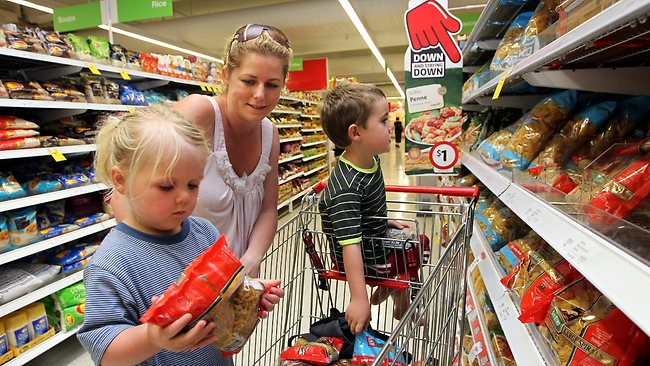
One of a parent's greatest challenges can be taking kids into a store.  Here are some ideas that may help!

1.  TIMING.  Avoid times when the store is crowded.  It's stressful for you and the kids, and will take longer.  Avoid times when the kids (or you) are tired and hungry.

2.  BE PREPARED.  Making a shopping list will help you get through the store faster with less distractions.  Take it a step further and map your course through the store, it will save you time and money!

3.  BE KID-FRIENDLY.  Use the kiddie carts in the store.  Bring snacks and toys to keep them occupied.  Hand your child items to place in the cart.  Talk about the items you see, let them help make simple decisions:  "Should we buy green or red apples today?"  Let them help put the items on the conveyor belt at the check-out.

4.  SET CLEAR EXPECTATIONS.  Let them know what you expect of them before going into the store, and what rewards/punishments there will be.  This might be time consuming at first, but as you are consistent, they will simply know what they should/shouldn't do.  Give lots of praise for good behavior and let them know how much it helps!


For more ideas you can check out this article on WebMD: http://www.webmd.com/parenting/features/grocery-shopping-kids


Photo Credit
                                           

Tuesday, June 23, 2015

Container Gardens

Growing an edible garden can be a great activity for kids this summer! A home garden lets your family eat local, know where your food is coming from, eat healthy, and save money. Plus, kids are more likely to eat vegetables if they come from their own garden! Not all families have the space, time, or soil quality to create a large garden in the backyard. Container gardening is a great alternative that allows kids to have their own small space to care for.

Photo Credit
Containers

Barrels, buckets, hanging baskets, clay pots...choose a fun container! Decide on a container that will match the amount of depth and soil needed for the plants you'll be growing. Avoid containers that could have previously held harmful chemicals. Find containers that have holes for drainage or make a few holes near the bottom to allow water to run out. You can put a saucer under the container to catch water, just empty it regularly.

Photo Credit
Planting seeds

Let your child choose what to grow and what they will eat! Sugar snap peas, sweet cherry tomatoes, potatoes, and carrots are usually easy to grow, but you can try any vegetable your child wants to grow. Look at seed packets to learn the best times to plant different crops.

Caring for the garden

Start with a mixed blend of potting soil. Add nutrients to your container garden with commercial fertilizer or compost materials. Teach kids to keep the soil evenly moist by watering frequently. Let them pinch off dry leaves to make room for healthy buds. Kids love to track the progress of their growing plants by measuring plant height and counting new leaves.

Enjoy harvesting and eating your edible garden!

For more ideas about involving kids in gardening, try these resources:

Start a Container Garden with your Family
Easy Foods Kids Can Grow in the Garden
Growing Edibles in Containers
Gardening with Kids
Create an Edible Container Garden with Kids

Friday, May 8, 2015

Healthy Eaters

With so many food options available in our communities, it's hard to know if our children are receiving proper nutrition for their growing minds and bodies. Healthy eating during early childhood helps kids become stronger, taller, and perform better in school. As kids grow into adults, healthy eating during childhood helps them become more intelligent and less likely to be obese. Obesity is now being labeled as an "epidemic" in the United States. What are some easy ways that parents can help their families be healthy?
Photo Credit
During meal and snack times:
  • Eat together as a family. Use this time to connect to your children and be a role model of good behavior and healthy eating
  • Prepare healthy foods and offer healthy choices at family meals
  • Serve fruits and vegetables for snacks
  • Save "treats" for special occasions to limit foods high in fat and sugars
  • Serve water instead of soda or sugar-sweetened drinks and make water easily available throughout the day
  • Switch to low or no-fat milk, yogurt, and cheese and choose lean cuts of meat
  • Bake or grill instead of fry
  • Switch to lower sugar breakfast cereals
  • Switch desserts like ice cream and cookies for fruit-based desserts

Help kids develop healthy habits:
  • Use smaller plates for kids; they need less food than adults
  • Don't force kids to clean their plates if they are full
  • Start with a small portion; children can have seconds if they are still hungry
  • Don't give up on new, healthy foods; use patience and let them see you eat it so they want to imitate you
  • Plan to avoid fast food by keeping healthy foods in the car, like dried fruit, applesauce, nuts, and whole grain crackers
  • When you do eat out, check the menu options beforehand and choose meals that have fewer calories (for example, are not fried or smothered in cheese or other sauces)
  • Limit TV and computer time to 1-2 hours per day at home, school, or child care
  • Encourage physical activity every day

Photo Credit
There are several great resources available online with additional tips to help keep families healthy. Here are a few sites that offer great suggestions about healthy eating and physical activity for children and families:

http://www.eatright.org/
http://www.letsmove.gov/
http://www.choosemyplate.gov/

Wednesday, March 11, 2015

The Infant Cereal Question

Baby's First Food


With my first baby I was so excited to introduce solid foods. Watching his expressions as he tried new things was better than watching the A&E production of Pride and Prejudice...almost. As my others came along I developed a sense of how terribly fast it all goes. (I also had a better sense of the thirteen-month-mess with which I would be contending). So with each child I was less excited for that developmental milestone. It meant they were growing up, no longer infants. Like all milestones, it was exciting, but a little sad.

A few of our kids also had allergies- all kinds of allergies. Our poor first drew the genetic short straw inheriting my asthma and allergies as well as my husband's eczema and allergies. It was a rough few years for him. So we were careful with what we introduced and when. Some of the kids had allergic reactions to infant cereal so my husband and I worked with our pediatrician to come up with alternate plans. I was relieved to discover how simple and inexpensive it was to prepare our own foods instead of buying jars. This meant our babies were very soon eating the same foods that we were. If we had peas, carrots, spinach, squash, or whatever for dinner, so did the babe. Once a month I would shop for fruits and veggies and spend one Saturday morning steaming, pureeing, and freezing into ice cube trays all that our developing baby would need. Basically I did this three or four times per baby because by then, they had moved on from purees.

photo credit
photo credit


The Cereal Shift


In our recent Welcome Baby home visitations, we have noticed an increasing trend toward not introducing infant cereal at all. We are curious as to why. We determined a post with some research about this subject might be welcomed as there seem to be so many with questions. As I pose questions and present research, I want to be upfront about the fact that my husband and I did not feed some of our babies cereal. This was a decision made child by child with careful thought, research, and guidance from our trusted pediatrician. Here are some of the reasons families have recently given for not wanting to feed their babies rice cereal:
photo credit

  • Concerns about empty calories
  • No nutritional value
  • Damaging or cancerous effects
  • Breast or formula milk is enough
  • There is no need to 
  • Friends or family didn't 

In addition to the online research I studied to find answers to these questions, I called my trusted pediatrician's office and spoke with our favorite pediatric nurse Cheri because I wanted a more personal response. I wanted to know what my pediatrician and staff had to say. 


Empty calories and no nutritional value?


photo credit
While rice cereal may not be as nutrient rich as breast milk, formula, or even many other food options, it is not empty calories. Cereal can be prepared with the breast milk and formula to enhance the intake of nutrient rich calories. Nurse Cheri described how around six months old infants' nutritional needs are changing. They develop a greater need for iron while at the same time, the supply of iron in breast milk and formula is depleting. According to Nurse Cheri, "there is more iron in formula, but the iron is more easily absorbed from breast milk." While there are other iron rich foods available (spinach, liver, red meat, and beans for example) these are not easily digested. Transitioning baby to solids from an exclusive milk diet ought to be a gentle, progressive process. Iron enriched cereals fit the bill. They provide the essentials for the developing child in a gentle, digestible way. "Juice is empty calories," Nurse Cheri went on to say, "there is no need for all of that sugar, no compensatory value. With cereal, they are getting the iron they really do need." WebMD said the following, “A common first baby food is a single-grain, iron-fortified cereal such as rice cereal or oatmeal. These baby cereals have the advantage of boosting your baby’s iron intake, and they’re easy to digest. Just mix with a little baby formula, breast milk, or even water on occasion.” Rice cereal is easily digested and hypoallergenic. These factors make it a natural choice as a first introduction and means to ensure enough iron is in your baby's diet. Once introduced, you can soon move on to more complex whole grains, fruits, and veggies. WebMD is also a good source for knowing how to determine when your baby is ready for solids.

photo credit
In addition, concern about the growing epidemic of obesity is understandable and warranted, but growing babies, beginning at six to eight months need more calories. Babies need to stock up for the incredible growth and development of the coming months. Consider the skills of crawling and walking and how much more energy they require than anything baby has previously expended. And if you have ever had an infant who was sick for a few days, you know how essential those stores can be. My four year old recently had the flu and didn't eat much for three days. He is now skin and bones. I wish he had had more fat to help him mange that short illness. I found an interesting story from Good Morning America which explores one pediatrician's claim that white rice cereal is a "gateway to obesity." He makes some interesting points, but has little evidence to support his theory.

Damaging, potentially cancerous effects?


A 2012 Consumer Report brought attention to the concern that arsenic had been found in many rice products. While a small degree of organic arsenic is to be expected and not so much of a concern, it is the inorganic arsenic residue from pesticides that has consumers concerned. Babycenter.com published an article on this subject which included the following, “The U.S. Food and Drug Administration says this about what parents should do when it comes to infant rice cereal: 'Consider alternatives for an infant's first solid food. According to the American Academy of Pediatrics, there is no medical evidence that rice cereal has any advantage over other grains as a first solid food... .' However, “The American Academy of Pediatrics (AAP) has so far made no specific recommendation, saying additional research is needed. The AAP recommends serving children a variety of foods to reduce their exposure to arsenic in rice products. And your child's doctor may suggest feeding your baby other foods instead, such as pureed vegetables, fruit, and meat, and grain cereals such as oats and barley." My personal recommendation is to see for yourself what your pediatrician suggests. To read about the AAP's recommendations and the "Bright Futures" program (which my pediatrician uses), follow the link to Promoting Healthy Nutrition.

Isn't breast or formula milk enough? Is there a need?

Again, the issue is the changing nutritional needs of developing babies. At first, the primary concern is the iron. There is a need to supplement an exclusively milk based diet in order to meet that need for iron. Nurse Cheri explained, "As the intake of solids increases, the need for milk decreases over time." Eventually, as children incorporate more foods into their diet, their nutritional needs will be met primarily with the foods they eat rather than milk. According to the Mayo Clinic, "Breast milk or formula is the only food your newborn needs. However, by ages 4 months to 6 months, most babies are ready to begin eating solid foods as a complement to breast-feeding or formula-feeding." They recommend the following progression when it comes to introducing foods to infants:

Start with baby cereal. Mix 1 tablespoon of a single-grain, iron-fortified baby cereal with 4 tablespoons (60 milliliters) of breast milk or formula. Many parents start with rice cereal. Once your baby gets the hang of swallowing runny cereal, mix it with less liquid and gradually increase the amount you offer. For variety, you might offer single-grain oatmeal or barley cereals.
Add pureed fruits, vegetables, and meats. Add foods gradually, one at a time.
Offer finely chopped finger foods. As babies become accustomed to differences in texture and digestion, continue to expand their exposure and offer a balanced diet. Encourage them to eat on their own and to explore at mealtimes.

 Friends and family don't use cereal

photo credit
At Welcome Baby we support and encourage looking to your community of friends and family for ideas, guidance and even advice as you parent. We want parents to rely on the wealth of resources available to them. We also encourage parents to make educated, informed decisions. If you find your friends and family are not feeding cereal to their babies, ask them why. Perhaps their reasoned decisions will make sense for you. If they do not have a substantial reason, perhaps further research and inquiry are advisable. If the concerns are about how infant cereal is processed, make your own. If the concern is that you prefer whole grains, try oat or barley. Once again, the main objective is the iron with which infant cereals are fortified. We encourage all parents to decide intentionally and carefully as you talk with your pediatricians about how to ensure the healthy nutrition of your child. Happy feeding!