Showing posts with label Playgroups. Show all posts

Monday, March 23, 2015

Make time for Playtime :)

Playtime is a child's most important work! Here are some ideas to help make the best out of playtime!


Encourage Children to Play

To children, play is just fun. However, playtime is as important to their development as food and good care. Playtime helps children be creative, learn problem-solving skills and learn self-control.  Good, hardy play, which includes running and yelling, is not only fun, but helps children to be physically and mentally healthy.


Children Need Playmates: 


It is important for children to have time with their peers.  By playing with others, children discover their strengths and weaknesses, develop a sense of belonging, and learn how to get along with others. Consider finding a good children’s program through neighbors, local community centers, schools, or your local park and recreation department.

Parents Can be Great Playmates: 

Join the fun! Playing Monopoly, reading, or coloring with a child gives you a great opportunity to share ideas and spend time together in a relaxed setting.


Playtime is a fabulous way to teach children in a fun and loving environment. It helps the children learn many different skills that they will use throughout their whole lives. Playgroup that is offered at the South Franklin Community Center in Provo, Utah is a wonderful way to help your children meet friends and play with children that are their own age. 


Where I found some of the information: 
http://childdevelopmentinfo.com/child-development/play-work-of-children/pl5/

http://www.psychologytoday.com/blog/freedom-learn/201409/playing-children-should-you-and-if-so-how

Friday, February 27, 2015

So You Want to Start Your Own Playgroup?

Photo Credit

Play is a key part of developing a child's social, mental, physical and emotional development. Said Jean Piaget, a notable theorist in the Child Development field, "Play is the work of children." 

Unbeknownst to so many that stacking colored blocks beside their friend or pretending to be mermaids as they splash with the hose was such an important moment in their education. Play provides endless opportunities for children to test the world around them, including the people in it. When children are able to play with other children their age the play is even more productive as they reach slightly past those things that they have yet to master and practice them. Allowing children to play regularly with their same-age peers will further all aspects of their development in real ways.

Playgroups provide exactly this kind of play. But not every community or neighborhood offers them. So what is a parent to do? Start their own! The steps are simple and the results are profound!

Photo Credit
1. Set the Parameters.  First determine the when, where and how. Decide whether playgroup will be held once a week, every other week, once a month, etc. Also determine what time of day your group will be, this could be before naps, in the afternoon, or when ever works for your group. Lastly choose a location for your group. This can be at your home, trading off homes, at a park or local meeting area. 

2. Pick the Players. The success of your play group is largely defined by who comes to play. Ideal play groups are made up of 4-6 children in the same age range and a balanced mix of boys and girls. Play group is also for more than just the children, so invite children with whom their parents you mesh with through similar lifestyles and parenting ideals.

3. Establish the Ground Rules. As a group determine the ground rules on toys, snacks, clean-up and communication. Decide what toys will be provided, i.e. blocks, games or dramatic play items that children can play with as a group or individual play items. Make a decision for whether snacks will be included, and if so who will provide them. One way that works well is a sort of BYOB rule where B stands for bananas of course. Clean-up rules can be sticky, especially if the group is held in one members home. Decide if you will confine the group to one room in the house, the backyard or if the whole house is free-reign. Lastly decide how your group will share information. Some ways that work well are group text messages, email or a Facebook page.

4. Test the Waters. The last step comes after the first few playgroups and that is to test the waters as you go. Determine if your time of day is conducive to all the children, the length of your playgroup can be shortened or lengthened, and how often you hold playgroup. Discuss with the other parents these topics and come to a decision as a group. As the one who's spearheaded the group however you are the final decision maker and communicator.

Though the set up of your playgroup requires a little time and thought, once you have your playgroup established there's only fun and games ahead. 

Steps from What to Expect.

Welcome Baby also has some Playgroup Lesson Plans that you can use with your kids. There are generic lesson ideas, special Holiday lesson plans, and all plans are for ages 1-5.
No matter what you choose to do, have fun!


Tuesday, June 10, 2014

Play Time: What's the Big Deal?


Sure play time is fun, but did you know there is more to play time than just keeping your kids busy? “What do you mean?” “It’s not just something fun to do?!” Well of course it is, but it is also a very important tool in the development of your little troublemaker.


Play is the way babies find out about themselves and the world around them.

When babies play they use all five senses to learn about the new things around them, especially in the first year! Your baby is always asking questions about the world like, “What does this feel like when I touch it?” “What does this sound like when I squeeze it?” “What will happen if I push this or pull that?” etc.

Though you don’t actually hear the questions, as parents you do see the results; toys flying here, food spilling there! 


Saying that play time helps development is great, but you want to know how?  Well, I’ll tell you!

Play promotes sociomoral growth as children:

·         Practice social roles.
·         Learn to take perspective of others.
·         Participate in turn taking, cooperation, and sharing.
·         Develop empathy and deal with issues of fairness and rule making/following.
·         Work through conflict with increasing flexibility.
·         Experience sheer fun – the positive aspect of fun is that it is essential to growth and a strong motivation for every kind of learning.

Play promotes cognitive development as children:

·         Change oneself into some object, person, or situation.
·         Combine and practice concepts they have already assimilated.
·         Use and rehearse new skills by putting together thinking skills in new ways to fit the play situation.
·         Learn new ideas from peers.
·         Share and communicated thoughts through roles they assume.
·         Increase problem solving ability (Sylva, Bruner, Genova, 1976).

Play promotes literacy and language development as children:

·         Use communicative (access rituals, topic development and maintenance, turn-taking, negotiation, etc.) skills.
·         Reconstruct events and sequences in events/stories thus leading to increased story comprehension (Pellegrini and Galdi, 1982).
·         Rely on language to organize and structure their play.
·         Practice new vocabulary by connecting words and images with a context.

Play promotes physical development as children:

·         Coordinate their actions with the actions of objects and other people.
·         Engage in activities that develop stamina, flexibility, strength, coordination, and fitness.
·         Practice gross and fine motor skills.

Yes, play is good for your children but don’t forget that play is for parents too.  That’s right, play is for you! Play is a time to enjoy with your baby and get to know them as they get to know you.

Play is important but don’t forget that it is also very fun and can be very easy to do! Here are five simple activities to help you get started:

Play peek-a-boo: little kids love this game and it is so easy to do!

Read a book: Let your child explore the book

Spend time face to face with baby: Imitate baby’s faces and sounds and let them imitate back

Build a fort: This one is great for older children, and all you need is what you can find around the house!

Pots and pans: This lets your baby explore sound!

What fun things do you do to play with your child?

This information came from handouts from Help Me Grow. Call us if you would like to know more!

Thursday, June 5, 2014

Playgroup Fun Anywhere!

Welcome Baby provides the community an opportunity for parents and their children to have fun interacting at Playgroup with activities and more! We would love to have you, and invite your friends! If you have questions, feel free to contact us.

We currently have 1 playgroup held at the South Franklin Community Center 
Where: 770 South 700 West, Provo, UT 84601
When: Every Friday, 11:00 am - 12:30 pm


Children are able to develop in many ways as they play. Bruce Duncan Perry, M.D., Ph.D. explains, "The child's cognitive capacity is enhanced in games by trial and error, problem solving, and practice discriminating between relevant and irrelevant information. Play requires the child to make choices and direct activities and often involves strategy, or planning, to reach a goal."

Children need to be children, so let them play and explore new things with you! Playgroups can be benificial in many ways, one of which is that children are able to stregthen their social skills. Parents can share experiences and gain support. In the past few playgroups, we've had a great turn out. Provo has a lot of diversity and we were able to see that a couple of weeks ago when we had five different languages at playgroup. Come join the fun and build relationships while gaining ideas for great activities!

If you can't come to Playgroup, try some of these ideas at home.
Here are a few!


Butterfly Paint Fun:
  • Cut out a butterfly shape as big as you wish.
  • Fold the butterfly in half vertically.
  • Have washable paint ready for children to pour onto the paper (different colors make for great designs)
  • Once the paint is on half of the butterfly, fold it and press down on the paper so the paint gets on both sides.
  • Open the paper up and let dry.
  • Staple pipe cleaners on for the antennas and enjoy your creation

Butterfly Peanut Butter Snack:
  • Cut a piece of bread horizontally after peanut butter has been spread over it.
  • Turn the 2 pieces facing out.
  • Put a carrot in the middle (For the butterfly's body)
  • Sprinkle raisins (or anything you would like on it) on the bread for fun.
Here are some other simple butterfly snack ideas!


Bird Feeder:
  •  Take out a few slices of any type of bread.
  • Make a little hole towards the top of the slice.
  • Sting yarn through the whole and tie a knot (so you can hang it up).
  • Spread peanut butter on one side.
  • Sprinkle birdseed over the peanut butter.
  • Hang up your bird feeder on a tree branch.

Check out some other shapes!


Please let us know how you liked these activities. If you have some activities that have worked for you, we want to hear about them!


Thursday, April 10, 2014

March Playgroup Recap

During March, playgroup was full of spring-themed crafts to welcome in the new season. We wanted to give everyone a chance to make the crafts at home so click on the links below the pictures for a link to the instructions. Happy crafting!

Play Dough
Click HERE for some awesome DIY play dough! 
We started out the month by making homemade, bright green play dough. The kids had pipe cleaners, figurines, beads, stickers and other items to help them create their own “play dough garden.” At the end of the day, everyone got to take home their play dough so the fun and creativity could continue at home.

Wind Socks
Click HERE for instructions! 
Children love to watch the wind blow around outside. Kids will have a blast making their own wind sock and then watching it blow around in the wind. Help your kids learn about the wind and the weather as they create this fun craft.

Water-colors painting
Follow the link HERE and scroll down to#6 on their list!
Bright colors and flowers are iconic parts of spring. We gave the kids at playgroup the chance to use their imaginations and paint their own pictures about spring with some bright water colors. It was so fun to see the kids gets so excited about their new creations. 

Rain
For more details click HERE
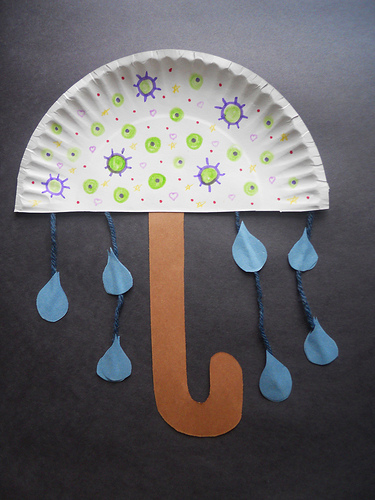
As Spring comes, we welcome in the rain to replace the cold snow we have had all Winter. To help your child learn more about rain and umbrellas, help them make an umbrella out of a paper plate, popsicle stick, and tinsel. They will have fun pretending to have it rain on them for hours!


Thursday, February 27, 2014

Welcome Baby Provo Playgroup: Valentine's Day

 As children are growing up and learning about the world around them, they need a variety of experiences in order to grow in the right ways. Research has actually shown that one of the key ways to strengthen your child’s social and emotional skills is by taking them to a community playgroup where they can interact with other children. (Citation)

Welcome Baby currently has a playgroup at the South Franklin Community Center in Provo that is open to children under five and their parents on Fridays at 11 am.

For our playgroup on Valentine’s Day, we started out the day with free-play where we played with blocks, cars, and other fun toys together. Then we moved on to making Valentine’s Day cards by tracing our hands. See how cute they turned out? This activity helped develop fine motor skills as the children color.  This activity can be used for any special occasion to share with a special someone.  Click on the link below to learn how to make your own.

 When all hands were traced, it was time to read “The Kiss Box” for story time. All the children gathered on a rug as they were read to, enhancing their cognitive development.
Then it was time for everyone’s favorite part of the day: snack time! In honor of Valentine’s Day, we made mini heart-shaped pizzas and ate oranges too.  

Check out how much fun we all had during playgroup and look below for a general schedule of what you can typically expect each Friday as we play! We hope you will join in all the fun and come to Provo playgroup! To join, visit the Welcome Baby website at www.welcomebabyuc.org or call us at 801-691-5320.

Playgroup Schedule:
11:00-11:20   Play time
11:20-11:25   Clean up
11:25- 11:45   Story time/ singing/ finger plays
11:45-12:00    Arts/ crafts
12:00- 12:15   Snack time
12:15-12:30    Large motor/games Clean up 


Wednesday, January 22, 2014

What happens at parenting class, stays at parenting class....

photo from: http://www.henry4school.fr/feb13P3.htm


Just kidding- we love to share! We just had our first Aspire Parent Group and Ready to Learn parenting workshop of the year and we wanted to pass on what we learned!

First we made parenting resolutions for 2014 which included:
-Having a set dinner time throughout the week
-Preparing an activity list to have on hand when the kids get restless
-When two or more people are sitting at the table, no books, newspapers, phones or computers are allowed
-Making a week long or month long dinner idea list to keep dinnertime less chaotic and more planned.

We also came up with a list of future discussion topics that everyone can look forward to:
- Inexpensive date night ideas
- Ways to keep cool when crazy things happen
- Making routines that are realistic and manageable
- Sharing parental responsibilities between mom and dad
- How to prepare for multiple children or better known as, how not to feel outnumbered
- and Strengthening Families

 The Aspire and Ready to Learn group happens on the third Wednesday of each month. It is a chance to share stories or vent frustrations with other parents who are in your same circumstance. We provide the pizza and a lesson and you bring the children and discussion! Hope to see you there next month!

Tuesday, August 7, 2012

Preparing for Preschool


Preschool - For many kids this is their first experience in a large social setting, let alone a school setting! The important thing to remember about this age is that children preschool age are still in the process of developing a long term memory system; so you will feel like you’re repeating yourself 100 times and that is because you are, but to the child it’s like it is their first time hearing this instruction. What preschool tries to do is get them into a routine; if you have the same routine day in and day out, with the same expectations for behavior they will eventually remember it. This initial learning about school routines and social behavior are two of the biggest reasons for preschool. So what can you do to help prepare your child for preschool? Since I have been teaching in a preschool that prides itself on being developmentally appropriate, I will tell you what we expect children to be able to do and let you decide what to do from there.


We do lots of creative expression activities in preschool.  We color, paint, cut, and glue to make representations. We also practice expressing ourselves through pretend play (this could be a short formal play), moving our bodies to music (representing actions in a song or freestyle), and we give them lots of opportunities to play with instruments (playing with rhythms and beats).


               * *Hint: try to help them feel comfortable in doing things like this by giving them similar experiences at home. We know that glue and paint can be messy but if you show and tell them what they can do with those items they really can do it and it can be such a wonderful experience for developing their small motor skills (preschool obviously helps to develop these skills but preschool can be so much more meaningful and full of learning if they already are in the process of developing these skills).


Believe it or not we also practice MATH skills in preschool! But it’s not the math worksheet math you’re probably thinking of. We practice our counting and recognizing numbers. We also focus on making comparisons and the development of questioning skills. Again, they will learn these skills in preschool, but they will learn so many other valuable skills if these skills have already been being practiced at home. They can learn the meaning of numbers (matching a numeral number 5 to  5 objects); they can learn and identify sequences and patterns; and they can even learn what happens when we join to a set (add) or separate from a set (subtract)!


Writing and Literacy. This is a large part of a preschool day; because it is such an integral part you will see large growth in their skills. Especially if it is reinforced at home. We give them lots of opportunities to write and recognize their name as well as their classmates names. We practice rhyming and the recognition of beginning word sounds (relating sounds to letters). As far as reading goes, we want them to realize that books/print is read from left to right and top to  bottom.


**Hint: the most useful thing you can do to help your child with writing and literacy is to read with and to them (giving them opportunities to ‘read’ as well).


Last, but definitely not least is the development of social skills. We covered this pretty well already with last week’s post. A large focus of preschool is giving children opportunities to express their feelings in acceptable ways (getting them to use their words). We give encouragement to interact with their peers and demonstrate how (this can be through role play; or by telling them what they could say if they want to ask if they can join in a play setting; or by asking our friends/classmates at large group time about a problem like hitting, and what we could do instead to solve our problems).  If your child has siblings there will be lots of opportunities for practice and reinforcement at home; if not, no worries, preschool will likely be able to develop these skills but a playgroup setting or time at a local park to also practice these skills will be helpful.  The second biggest thing with social skills is sharing. This is second biggest because they need to be able to use their words to ask if they can use a tool or toy AND they need to be able to use their words to say “yes”, “no”, or “I am using it right now, but you can have it when I’m done”. As parents when a child asks for something nicely we usually give it to them immediately; we can help them learn how to emotionally regulate their  feelings by saying what we expect them to be able to say: “yes”, “no”, or “I’m using it, but you can have it after me”. Any response other than “yes” will be unexpected for them, so giving them practice at home before going off to school will help them know how to deal with the situation rather than being surprised and then angry.

Good luck and enjoy this fun period where there is so much learning, growth, and development taking place!

Wednesday, April 4, 2012

Welcome Baby Playgroup

We are excited to announce that our sister program here at United Way is opening a new playgroup in the Orem area. Welcome Baby hosts various playgroups throughout Utah County to encourage parents to come play with their children, to interact with other parents, and build those social connections. Playgroups are a great way to strengthen social connections within the community. 
Photo
The playgroup is starting this Friday, so we want you all to come see what fun lesson plans and activities we have. The focus of this playgroup is to help children be prepared to enter Kindergarten through fun interactive activities. 
Anyone is welcome to attend!

Friday, April 6th
10:00 AM
Kids On The Move
475 W. 260 N. Orem, Utah

*Weekly playgroup will be held each Friday at 10:00AM*
Come enjoy FREE activities, singing time, snack time, and play time.
Photo

If you are interested in learning more about the Welcome Baby program or about other playgroups in the area, you can email them at baby1@unitedwayuc.org or 
call them at (801) 691-5320.