Thursday, June 30, 2011

Positive Discipline Guidelines


Discipline is a part of parenting. We all know that and it can be difficult to do sometimes. What’s appropriate? What actually works? The following are positive discipline guidelines:

1.      1. Misbehaving children are “discouraged children” who have mistaken ideas on how to achieve their primary goal—to belong. Their mistaken ideas lead them to misbehavior.
2.       2. Use encouragement to help children feel “belonging” so the motivations for misbehaving will be eliminated.
3.       3. Give encouragement through spending special time, “being with them,” doing something you can enjoy together. With younger children this could be 15 minutes a day. With older children it could be an hour once a week.
4.      4. At night ask your children to share with you their “saddest time” during the day, and their “happiest time” during the day. Then share with them.  You will be surprised what you learn.
5.     5. Have family meetings to solve problems with cooperation and mutual respect. This creates a loving atmosphere while helping children develop self-discipline, responsibility, cooperation, and problem-solving skills.
6.      6. Give children meaningful chores. Many children would rather cook than wash dishes. Children feel belonging when they know they can make a real contribution. Decide together what chores need to be done. Put them all in a jar and let each child draw out a few each week. Then no one is stuck with the same chores all the time. 
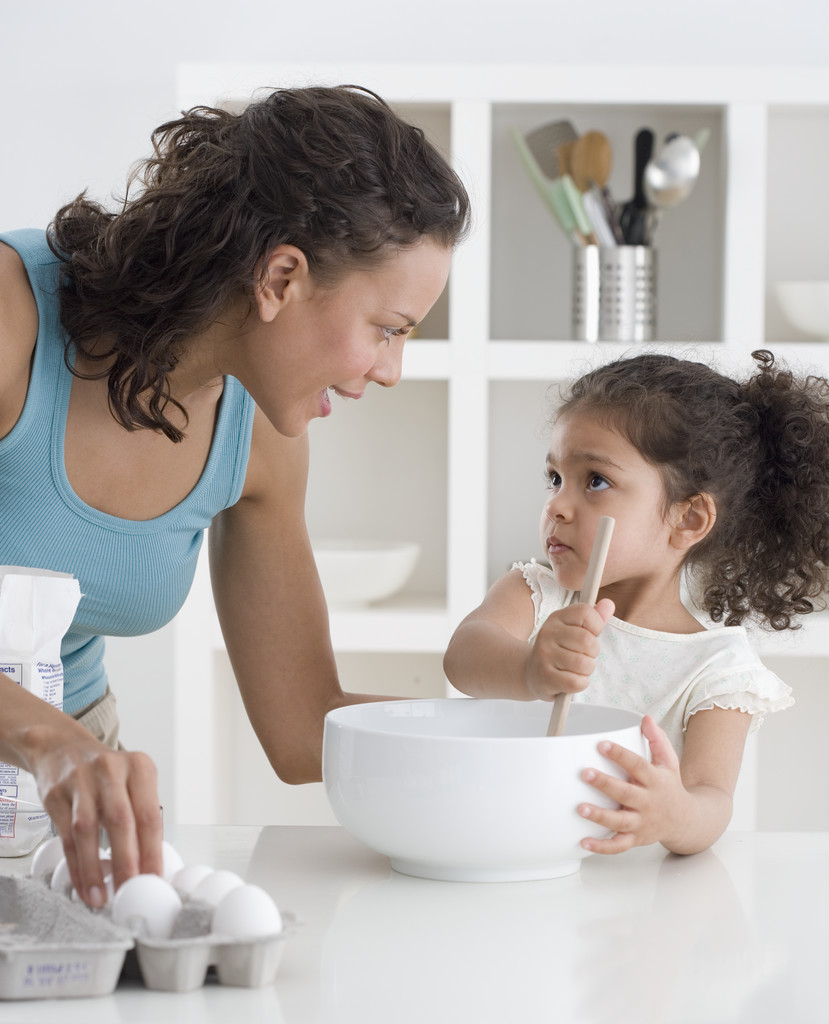
  7    7. Take time for training. Make sure children understand what “clean the kitchen” means to you. To them it may mean simply putting the dishes in the sink.
8.      8. Children do not do better by first making them feel worse. Do you like doing better when you feel humiliated?
9    9. Punishment may “work” if all you are interested in is stopping misbehavior for “the moment.” Sometimes we must beware of what works when the long-range results are negative—resentment, rebellion, revenge, or retreat.

Stay tuned for more positive discipline suggestions. Share your positive discipline experiences! Try these out and tell us what happened! Comment on anything! 

Source: Positive Discipline book by Jane Nelsen

Monday, June 27, 2011

Dr. Brazelton and Touchpoints

Who is T. Berry Brazelton, M.D.?
He is a pediatrician who is known as the first person to place the observation of the child/parent interaction at the center of his pediatric research. This lead to the now common knowledge that children’s personalities can shape mothering styles (calm, less active babies produce a confident, satisfied mother). He has experience as a beloved pediatrician to two generations of patients. His great empathy for the universal concerns of parenthood and his candor and wit as he explains the complex feelings parenthood engenders, have made him America’s favorite pediatrician.
What is Touchpoints?
Touchpoints was written by Dr. Brazelton and is the essential guide for every parent of an infant or toddler. Families everywhere have long found reassurance and much-needed support from this book. Boston Globe says, “If you read only one book while your child is an infant, go for T. Berry Brazelton’s Touchpoints.” Help Me Grow’s team would also have to agree!
Part One is a chronological account of the touchpoints of development—the predictable spurts that are often preceded by distressing regressions. Part Two is an alphabetical reference to the most common problems of early childhood. Part Three explains the vital role of the child’s “allies in development”—mothers and fathers, grandparents, nannies and childcare centers, pediatricians and nurses, and friends.
 

What do you think about Touchpoints ? Have you heard about it or read it? Tell us! Express your thoughts and comments! We want to know!

Thursday, June 23, 2011

Resource Spotlight! The "Still Face" Experiment

Have you ever tried the “Still Face” experiment with your child? It was designed by Dr. Edward Tronick, director of UMass Boston's new Infant-Parent Mental Health Program and Distinguished Professor of Psychology. This experiment was a result of Dr. T. Berry Brazelton’s work, a pediatrician who is known as the first person to place observation of the child/parent interaction at the center of his pediatric research. 

“Still face” is an experimental procedure for studying infant social and emotional development. First, the mother plays with her baby that’s about a year old. They engage, interact, and the mother responds to the infant’s cues. Then the parent suddenly looks away and turns back with a “still face” and stops responding. A developmentally normal baby will recognize that something is wrong and try everything to get the mother’s attention and interact again. They will keep trying to influence the parent to engage while the parent remains disconnected from the child and his/her needs. The infant will smile, point, put both hands up in the air or make screechy sounds. The infant will eventually crumble and turn their head away or lose their posture because of the stress they’re experiencing. This demonstrates TYPICAL BEHAVIOR. After a short period of time, the parent then returns to playing and reengages her infant. The parent can then quickly change the child’s emotion as she responds to the infant. 

This interaction of moving from good socialization to periods of bad but repairable socialization has been used to study many aspects of early social and emotional development. This test is used to find infants who DO NOT attempt to engage the unresponsive mother. This behavior is a warning sign for ASD or other mental health disorders because developmentally normal infants are very responsive to their social environment.

The video below shows the “Still Face” experiment. Take a look and then try it!


Monday, June 20, 2011

Kindergarten Readiness

You may have asked yourself, how can I help my child get ready for kindergarten? What are they expected to know? Well, the following are skills that help to ease children transition into kindergarten. This list represents the IDEAL- something parents can AIM for.
Reading Readiness
                        -Remembers pictures from a printed page
                        -Repeats a 6 to 8 word sentence.
                        -Pretends to read (has been read to often).
                        -Identifies own first name in writing
                        -Attempts to print own first name
                        -Answers questions about a short story
                        -Looks at pictures and tells a story
                        -Understands words are read left to right
                        -Familiar with the letter of the alphabet
                        -Knows some nursery rhymes
                        -Knows meaning of simple words
Time
                        -Understands day and night
                        -Knows age and birthday
Recognizes Colors & Shapes
                        -Recognizes primary colors
                        -Recognizes triangles, circles squares, and rectangles
Numbers
                        -Counts to 20
                        -Can count objects
Listening & Sequencing
                        -Follows simple directions
                        -Pays attention
                        -Recognizes common sounds
                        -Retells a simple story in sequence
                        -Repeats a sequences of sounds
                        -Repeats a sequence of numbers heard
Size, Position & Direction
                        -Big and little
                        -Long and short
                        -Up and down
                        -In and out
                        -Front and back
                        -Over and under
                        -Hot and cold
                        -Empty and full
                        -More and less
                        -Fast and slow
                        -Top and bottom
Motor Skills
Gross Motor Skills
                                                -Run
                                                -Walk a straight line
                                                -Jump
                                                -Hop
                                                -Alternate feet walking downstairs
                                                -March
                                                -Stand on one foot 10 seconds
                                                -Walk backwards for 5 feet
                                                -Throw a ball
Fine Motor Skills
                                                -Paste pictures on paper
                                                -Clap hands
                                                -Buttons
                                                -Builds with blocks
                                                -Completes simple 5 piece puzzle
                                                -Draw or color beyond a simple scribble
                                                -Zip clothes
                                                -Control pencil and crayon well
-                                               -Handle scissors
                                                -Cut and draw simple shapes
Social-Emotional
                        -Express self verbally
                        -Looks forward to going to school
                        -Recognizes authority
                        -Shares with others
                        -Helps with family chores
                        -Works independently
-                       -Identifies other children by name
                        -Can take care of toileting needs independently
                        -Cares for own belongings
-Dresses self
-Brushes teeth
-Can be away from parents 2 to 3 hours
-Joins in family conversation
-Carries a plate of food
-Maintains self-control
-Gets along well with others
-Talks easily
-Meets visitors without shyness
-Puts toys away
My Child Knows…
                        -Body parts
                        -Own first name
                        -Own last name
                        -Parents/Guardians’ Names
                        Home address
                        -Home phone number
                        -When to use a tissue
                        -Own sex

The list was compiled by researchers for World Book, Inc., on the basis of a survey of 4,500 kindergarten teachers. Share any comments!

Wednesday, June 15, 2011

Resource Spotlight!

As a parent, it is hard to determine who you can trust regarding your kids.  You want them to be in the best possible care and with individuals that are qualified.  

Utah Valley University offers a great program for parents seeking information about quality childcare for their children. The Childcare Resources and Referral (CCR&R) is an excellent program for parents seeking information for quality childcare.  Their website and programs offer free references to licensed and certified childcare providers in both English and Spanish as well as technical assistance to licensed centers and family home child care.  They also teach early childhood career ladder classes to childcare providers.  The CCR&R is focused on collaborating with community partners to improve childcare and a great resource for parents.

If you would like more information about CCR&R, you can contact them at 1-801-863-8220 or toll free at 1-800-952-8220 or visit their website at www.uvu.edu/ccrr.  For Spanish please call 1-801-863-7458.